Compiled & Edited by: Deep Tide TechFlow
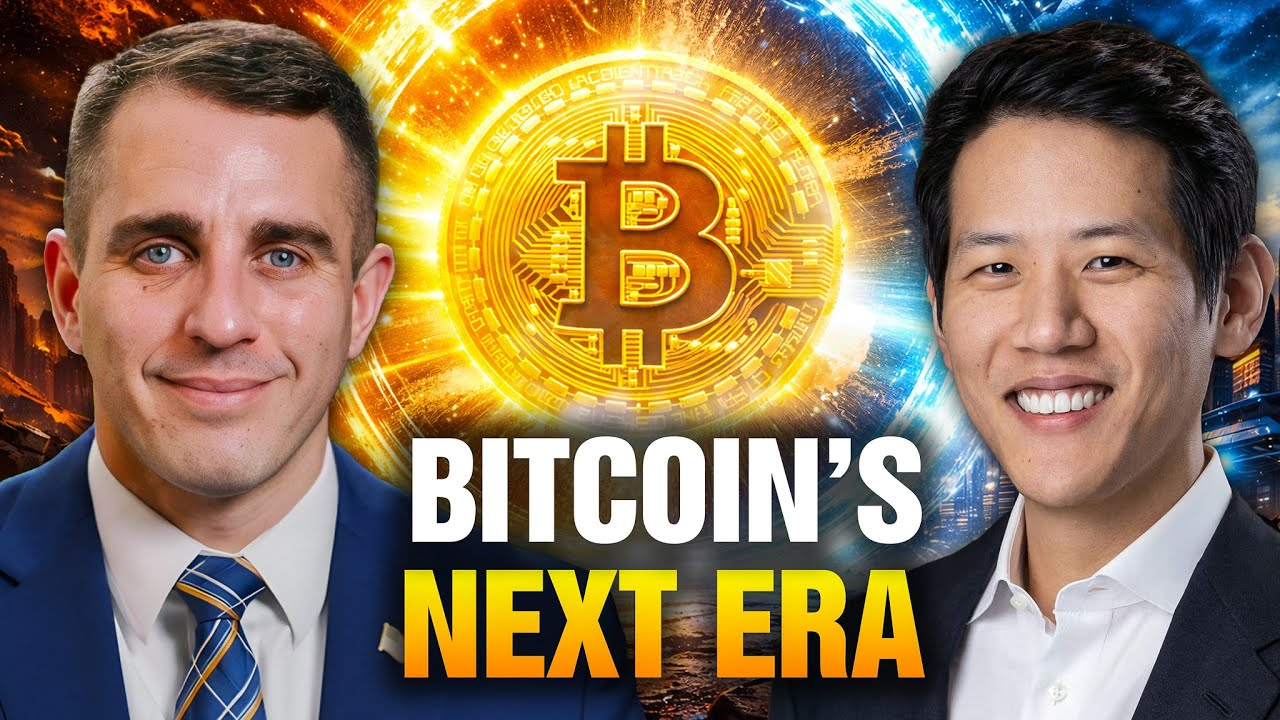
Guest: Jeff Park, Partner and CIO of ProCap Financial
Host: Anthony Pompliano
Podcast Source: Anthony Pompliano
Original Title: Why the Bitcoin Narrative Is Shifting Right Now
Release Date: February 5, 2026
Key Summary
Jeff Park is a Partner and Chief Investment Officer at ProCap Financial. In this conversation, we explore Bitcoin's recent price pullback, analyze whether the market has entered a true bear market phase, and discuss the current interest rate environment and the role of the Federal Reserve in the economy. Additionally, we talk about the possibility of Kevin Warsh being nominated as Fed Chair, Jeff's outlook on the precious metals market, and his warning about one type of asset investors should avoid in the future.
Highlights
- We are in a bear market. Even if policies become more accommodative, it may not necessarily push us into a bull market.
- If you have already made good profits from silver investments, now might be the time to move that capital into Bitcoin.
- "Positively correlated Bitcoin" might be the truly important direction for the future, where Bitcoin rises even as interest rates increase.
- We initially chose Bitcoin because we believed scarcity could solve the problem of manipulated money supply.
- I remain very bullish on Bitcoin's future, but this is more because I believe the role of government will become more centralized, and Bitcoin will re-emerge as the ultimate hedge against this system.
- The position of Fed Chair should not be held by a socialist or a nationalist; we need a technocratic official who is also pragmatic. Warsh and Bessant恰好 possess these qualities.
- If interest rate cuts do occur in the future and liquidity increases further, I think price volatility in the precious metals market could become even more intense.
- The market outlook for silver is not optimistic. Silver's performance in the precious metals market is very similar to that of altcoins in the cryptocurrency market.
- Kevin Warsh deeply believes that blockchain technology is not magic, but a tool that can solve many practical problems and improve efficiency, and Bitcoin is an important part of this technological culture.
Is the Bitcoin Sell-off Sustainable?
Anthony Pompliano:
Jeff, Bitcoin has been falling recently. Personally, I feel the market might continue to be volatile or even decline further; we might have entered a bear market. Bitcoin's 40% drop has attracted a lot of attention. What do you think? Do you think we are in a bear market now? Do you think Bitcoin's decline is sustainable?
Jeff Park:
I believe we are indeed in a bear market, and it has been going on for some time. One thing to remember is that in the past, people liked to view Bitcoin as a hedge, believing it was positively correlated with global liquidity—meaning that increased global liquidity was generally good for Bitcoin. However, the reality is that this relationship has long been broken.
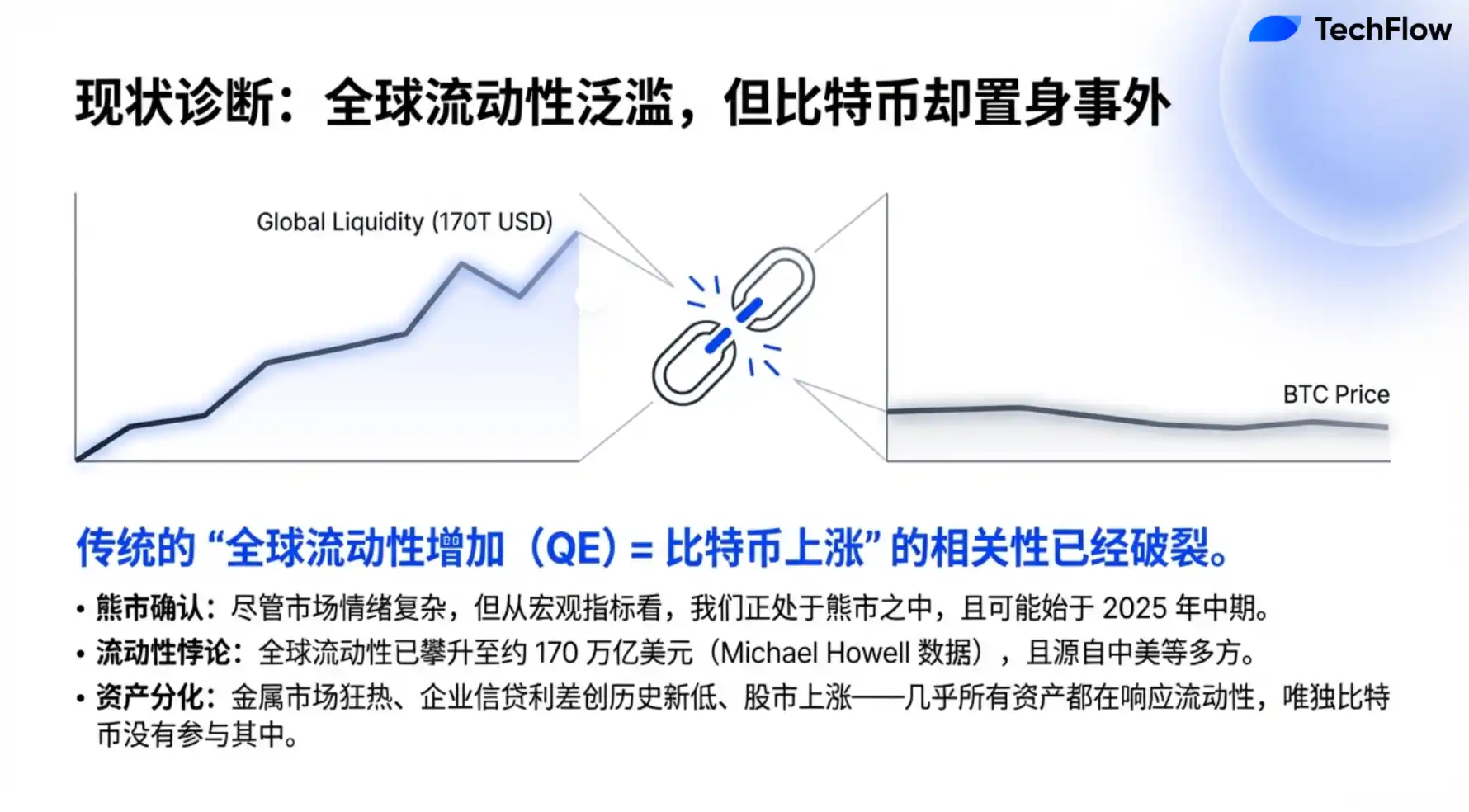
In the cryptocurrency space, we often get used to the idea that history will simply repeat itself. This thinking is actually a concession to behavioral biases, such as believing that altcoin rallies always follow Bitcoin's, or trusting the so-called "four-year cycle," or assuming that quantitative easing (QE) and low interest rates will definitely benefit Bitcoin. But the world is constantly changing, and many situations are different from the past. Now, an important assumption we need to re-examine is: are quantitative easing, global liquidity expansion, and low interest rates really beneficial for Bitcoin? Although this was true in past cycles, the situation might be different now.
Currently, global liquidity is actually increasing steadily. According to Michael Howell's tracking data, global liquidity reached about $170 trillion by 2025, sourced from China and the US, and it may accelerate further in the future. We can see this trend in the general rise in asset prices, such as the strong rebound in the metals market and corporate credit spreads hitting historical lows. This suggests that Bitcoin should have participated in this rally, but it hasn't, indicating that some fundamental mechanisms may have changed. Therefore, I believe we are indeed in a bear market, and it might have started as early as mid-2025, when the Fed's balance sheet began to contract, especially as the Treasury began rebuilding the Treasury General Account (TGA).
Looking ahead, we may need to accept a reality: even if policies become more accommodative, it may not necessarily push us into a bull market. However, this actually makes me somewhat optimistic about Bitcoin's potential future catalysts for growth.
I mentioned the concepts of "negatively correlated Bitcoin" and "positively correlated Bitcoin" before. The "negatively correlated Bitcoin" we are familiar with refers to Bitcoin rising along with risk asset prices in an environment of low interest rates and accommodative policies. But there is another possibility: "positively correlated Bitcoin," which I see as the ultimate goal, where Bitcoin rises even as interest rates increase. This situation is completely opposite to the QE theory, and its underlying logic is questioning the reliability of the risk-free rate. In this case, we are essentially saying that the risk-free rate is no longer risk-free, dollar hegemony is no longer absolute, and we can no longer price the yield curve in the old way. This means we need a completely new model, perhaps a basket of commodities-based currencies, and Bitcoin could be exactly that hedge.
Therefore, I think this "positively correlated Bitcoin" might be the truly important direction for the future. The current money supply and financial system have problems, and we also know that the cooperation between the Fed and the Treasury is not sufficient to advance the national security agenda. All of this makes me feel that to get Bitcoin out of its current slump, we may need to discard old perceptions and return to Bitcoin's essential value—we initially chose Bitcoin because we believed scarcity could solve the problem of manipulated money supply. So, although global liquidity is increasing, it is not actually Bitcoin's friend.
Fed vs. White House: Is Bitcoin Looking Forward or Backward?
Anthony Pompliano:
Jeff, I feel there are two different perspectives to analyze the current economic situation.
First, historically, we have always thought that monetary policy was the main driver of the economy and asset prices. However, now the current US administration seems to be trying to wrest control of the economy from the Fed. They are doing this by relaxing regulations, cutting taxes, imposing tariffs, and trying to depress the US dollar. At the same time, they are riding the tailwind of AI development to boost economic growth. The Fed seems somewhat passive, whether voluntarily or forced, trying to figure out the various trends in the economy and how to respond.
So now the economy seems to be in a dynamic power balance between the Fed and the White House, and we need to figure out whether the Fed or the White House is主导 (dominant) in driving economic policy.
Second, I'm also thinking, is Bitcoin's market behavior more forward-looking, or does it reflect the current or past economic situation more? When you described Bitcoin holders' psychology, you said they are like "driving by looking in the rearview mirror," thinking that the past four-year cycle will always repeat, so there's no need to look forward, just follow past patterns. And I feel your view is more like reminding us that we should "look through the windshield at the future," which might be a better way to analyze.
So the question is, is Bitcoin's performance based on the current economic situation, or is it predicting future developments? For example, in 2020, many investors bought Bitcoin and gold because they expected inflation was coming; markets are usually forward-looking. If Bitcoin is falling now, does that mean deflation risks are greater? Or is it warning us of other potential problems? How do you view the power balance between the Fed and the White House? And is Bitcoin looking at the future or reviewing the past? How should we interpret the current price action in the broader context?
Jeff Park:
That's a good question. There's an interesting concept in my mind, I call it "Bitcoin in peacetime" and "Bitcoin in wartime." In times of peace and prosperity, we expect the monetary system to function normally, and the investment framework operates in the traditional way. This is "Bitcoin in peacetime," which is more tied to inflation and used as a hedge against it.
But "Bitcoin in wartime" is completely different. In "wartime," the main forces driving economic growth are no longer monetary policy, but a combination of industrial policy, military policy, and fiscal policy. This has happened before in history—during crisis moments between democratic nations and more authoritarian governments, the importance of monetary policy often gives way to the priorities of power struggles.
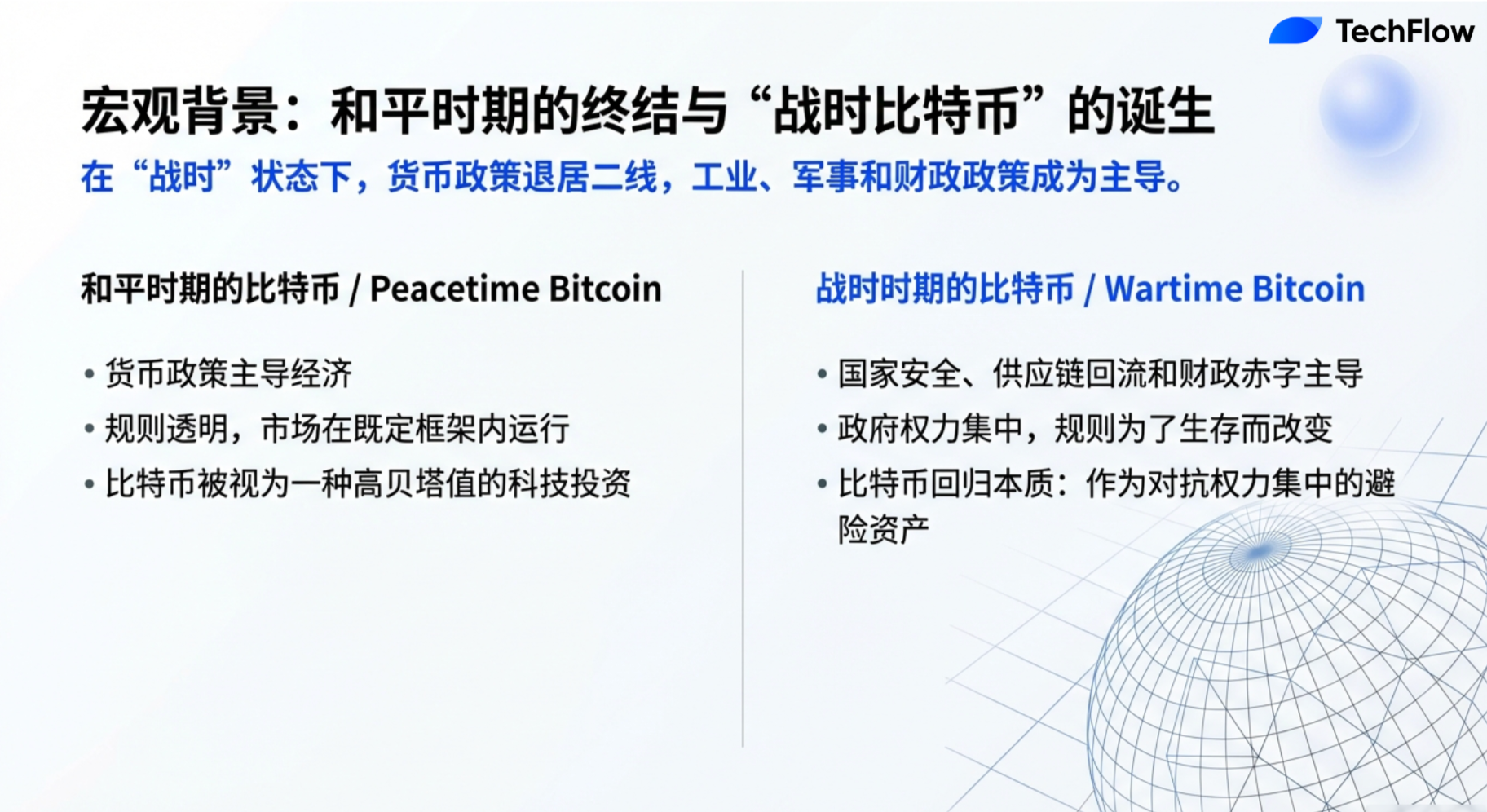
Therefore, your point about Bitcoin's future positioning is correct. Part of the reason is that during the Trump administration, the world seemed to become more centralized. In the past, we were full of憧憬 (longing) for the concept of decentralization, believing that dispersing resources and establishing checks and balances was a virtue, and Bitcoin and cryptocurrency were manifestations of this idea. However, looking closely at recent US crypto policy, it is actually moving towards a more centralized model. For example, stablecoins are bringing banks into the centralization of yields; tokenization is also being used more as stocks rather than long-tail assets; coupled with the centralized nature of the Trump administration itself, these all give Bitcoin a kind of "centralized" energy.
Bitcoin's value has always been in its decentralization and censorship resistance; it represents "free money." US investors have many other choices, like silver, metals, AI-themed investments, etc. The people who really need Bitcoin are those living under oppression, facing capital controls. If you believe the future world will be more divided, more chaotic, and even have more capital controls, then Bitcoin's importance will be more prominent.
Therefore, I remain very bullish on Bitcoin's future, but this is more because I believe the role of government will become more centralized, and Bitcoin will re-emerge as the ultimate hedge against this system.
Kevin Warsh and the Future of the Fed
Anthony Pompliano:
You mentioned Kevin Warsh; he is clearly the new nominee for Fed Chair. He has expressed some very positive views on Bitcoin; he doesn't think Bitcoin will compete with the dollar but believes Bitcoin has a unique role in investment portfolios. What do you think of his potential as Fed Chair? How might he influence Bitcoin's development in the future?
Jeff Park:
To be honest, I really admire Kevin because I think he is an expert with a deep understanding of how things work. He understands that sometimes you need to break the existing model to take the next step, and he also knows that only by truly understanding the root of the problem and diagnosing it correctly can you find a solution. You can't just change for the sake of change, and those who really understand things are often reluctant to change the status quo easily. Having this innovative thinking requires great courage, and Kevin恰好 possesses this quality.
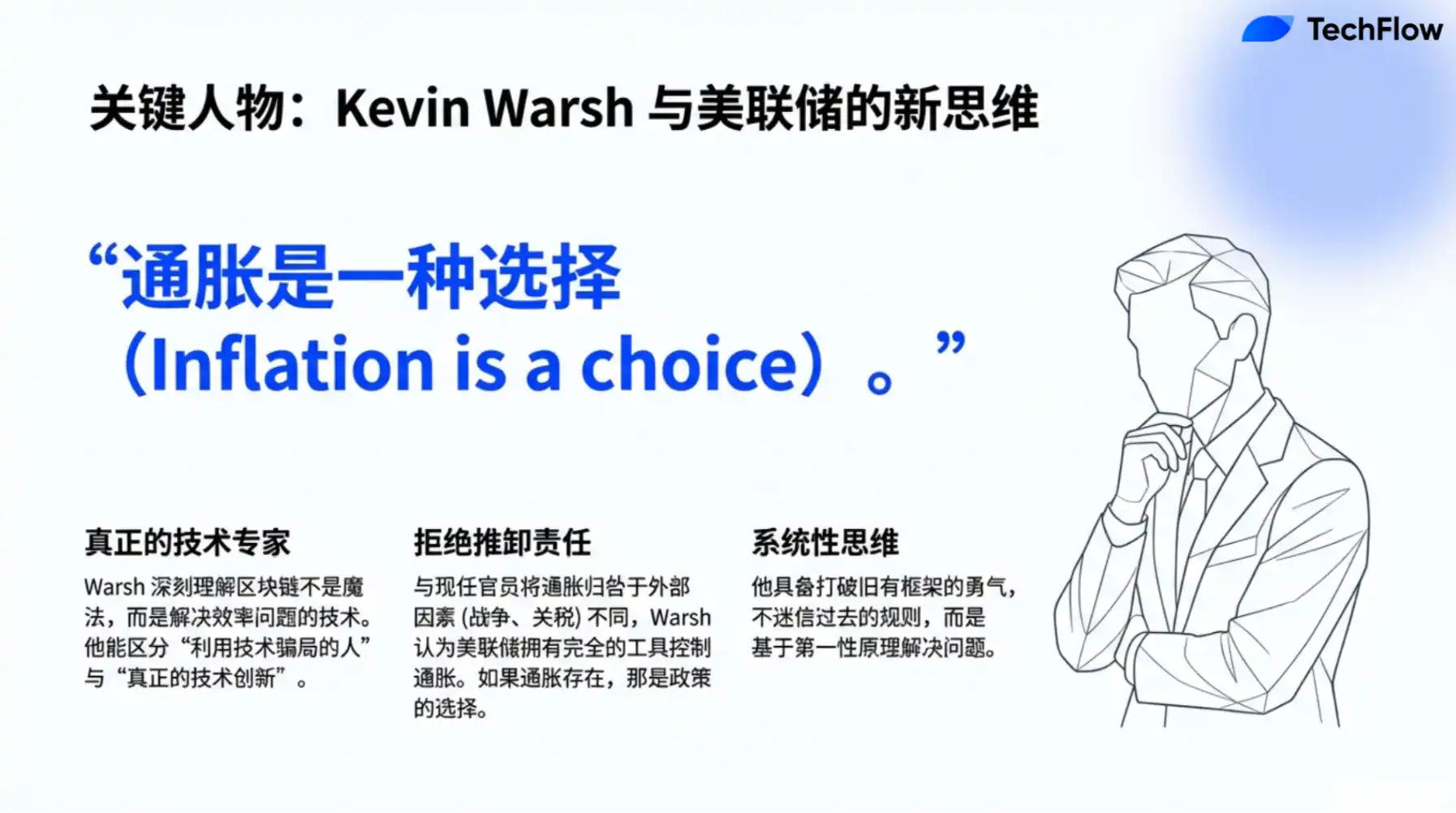
Furthermore, he is an excellent technocrat. In a conversation I had with him, I clearly remember his passion for cryptocurrency. He mentioned that there are many "hypocrites" in this world who think technology is some kind of magical thing but don't understand its essence, just betting blindly, and not for the right reasons. In contrast, Kevin deeply believes that blockchain technology is not magic, but a tool that can solve many practical problems and improve efficiency, and Bitcoin is an important part of this technological culture.
This is crucial because many technologists don't really understand how technology actually works. For them, imagining the innovation space of technology is counterintuitive. For example, when we talk about productivity growth, the Fed might not detect the deflationary effects that are coming from AI. This cognitive gap exists because many people cannot envision that the future might be completely different from the past, like Kevin Warsh can. So I think he is first and foremost a technocrat, and this is particularly important today. I believe that in the field of monetary policy, we need more leaders with such technological vision.
Additionally, Kevin has rich work experience at the Fed. By studying his past actions, one can find that he truly believes in the value of the Fed as an institution. He is not the type who advocates ending the Fed's independence, but he understands why the Fed's independence is challenged and knows how to reshape the institution to regain public trust. He once said something that impressed me deeply: "Inflation is a choice." In contrast, we see the current Fed Chair Powell and others似乎 always looking for external excuses for inflation, like "inflation is because of tariffs" or "inflation is because of the Ukraine war." They are almost unwilling to admit that inflation is the Fed's choice, when in fact, inflation is a policy choice and one of the core missions of the Fed's existence.
About inflation, another point that needs clarification is that inflation and nominal price changes are two different things. Many people confuse the two, thinking that a 5% price increase in a commodity is inflation, but that's just a price change, and price changes can be caused by various reasons, like wars or tariffs. True inflation is a dynamic concept, the long-term trend of the rate of price change, not a one-time price fluctuation. The Fed's duty is not to focus on monthly price changes but to manage the trend of these price changes over the long term. This is often overlooked.
Kevin Warsh's view that "inflation is a choice" is something I strongly agree with because the Fed actually has complete tools to control inflation, if they are willing to take action.
Anthony Pompliano:
It's interesting that two seemingly contradictory situations can coexist. I think people always want a simple answer, like inflation or deflation? High inflation or low inflation? But in reality, the economic system is very complex, and Bitcoin似乎 simplifies these complex economic relationships. You don't need to learn all these complex economic principles; you just need to understand supply and demand: if more people want something, its price goes up; if demand decreases, its price goes down. Bitcoin's philosophy seems to be about reimagining the monetary system. If that's the case, are they trying to make this system simpler? Do they hope to simplify this complex economic machine into a system that anyone can easily understand?
Jeff Park:
Yes, the system is inherently very complex, and I'm not sure if it can really become simple. However, I think they should make it more transparent and honest. Americans have lost confidence in the current monetary system not just because it has become complex, but also because it lacks transparency. I think one of Kevin Warsh's tasks will be to change how the Fed uses its balance sheet while addressing the obvious transparency issues in the current system.
For example, at the Fed meeting in January this year, someone asked Powell a question about the relationship between the value of the dollar and the mechanism for setting interest rates. Against the backdrop of a significantly strengthening dollar, this was clearly an important question because the core of interest rates is that the value of the benchmark currency directly affects long-term yields and rates. But Powell's answer was: "We don't look at the level of the dollar when making policy." To some extent, he might be trying to simplify the issue because this is not his area of expertise. However, this statement ignores an important reality: the value of the dollar is indeed closely related to interest rate policy. But actually, the two can be兼顾 (considered together).
This is why I am optimistic about the possibility of a new Fed-Treasury accord. Bessant and Warsh have the opportunity to redefine this accord. The core of the problem goes back to the Triffin Dilemma: the US dollar, as the global reserve currency, must both meet international reserve demands and ensure domestic economic stability, and there is an inherent contradiction between these two.
Therefore, what we need is not the absolute independence of the Fed, but functional interdependence between the Fed and the Treasury. I think we need to move away from the notion that "Fed independence is challenged" and instead accept that "the Fed must establish a functional collaborative relationship with the Treasury" to formulate more reasonable policies. Once we achieve this, the Fed will take an important step and regain public trust in its role.
Anthony Pompliano:
What do you think about the backgrounds of Warsh and Bessant? They both came from the same system, studied under the same mentor, you could say they share the same way of thinking and work philosophy, perhaps他们是 among the greatest risk-takers in history.
Jeff Park:
This excites me very much; I have expressed my views online many times. Since last year, I have always believed that Warsh must become the Fed Chair. This is a historic moment because you can find two people who trust each other and know each other deeply, both having worked under possibly the greatest market practitioner in history, and now they have the opportunity to bring real change. At this level, the importance of a trust relationship cannot be underestimated.
This reminds me of some previous situations. For example, Warsh was once a candidate, then Hasset appeared, he became a candidate, then it was Rick Reer's turn, but actually, throughout the process, I kept thinking: "You are missing the bigger picture."
This seems like Trump's decision, but actually, who ultimately influenced this decision? It was Bessant. Who would he choose to work with? Who would he trust? Who can realize his vision and changes for the country's future? There has always been only one answer, and that is Warsh. When you realize this, you find it is a very clear and powerful moment. Because of this trust relationship, we can now achieve some goals on the global stage that were previously impossible. I am very excited about this.
Of course, I know many people have prejudices against billionaires, thinking they only care about their own interests and won't consider ordinary people, but I hold the opposite view. I think we should expect these people with huge resources to do something meaningful. Because if it's not these resource-rich people driving change, it might be some people with ill intentions controlling the situation. Rather than that, it's better to let those who no longer need to make money for themselves to drive system improvements. I believe that for Bessant and Warsh, the last thing they care about is how to make more money for themselves; what they truly care about is how to fix the entire system.
Because of this, I am very optimistic about them. They have a deep understanding of the market because they are practitioners in the capital markets themselves. They know that although the Fed as an institution has its merits, there are still many problems. And they possess the wisdom, integrity, and clear communication skills to drive change; such a combination is actually very ideal.
In my view, the position of Fed Chair should not be held by a socialist or a nationalist; we need a technocratic official who is also pragmatic. Warsh and Bessant恰好 possess these qualities, and I am very期待 (look forward to) their future.
Anthony Pompliano:
What I find interesting is the cooperation between Warsh and Bessant. They not only understand the US financial system deeply but also have a global perspective. For example, some measures Bessant took in Argentina back then proved to be very wise. Although they caused quite a bit of controversy at the time, and some even questioned why spend money on that, but in retrospect, those decisions were truly farsighted.
The US has always been a country with an adventurous spirit, always with a "let's go build" mentality. But from a monetary policy perspective, the US is also trying to cut excess spending and carry out some reforms. In this mindset, you need people who truly understand probability and risk. I think this is also the point you mentioned: these people have spent their lives studying these issues, right?
When Bessant was nominated, I'm not sure how many people thought he would be outstanding. People might think he is smart, but there might not have been an overwhelming consensus that he would be excellent. However, if we look back objectively now, he might be one of the best Treasury Secretaries I've seen in my lifetime. And Warsh complements his shortcomings, creating a "1+1>3" effect. Warsh served as a Fed Governor during the global financial crisis and knows the inner workings of the Fed deeply. Afterwards, he applied this experience as a trader. Now he returns to this system, bringing a different perspective and experience, and their trust relationship正好 bridges their differences.
Jeff Park:
Yes, I think a key point you mentioned is that leaders need to have the ability for systemic thinking. Because in economic policy, actions in one area can affect outcomes in another. To understand the probability of this interaction, one must realize that monetary policy does not exist in isolation. It is actually closely related to fiscal policy and also intertwined with industrial policy. For example, Trump wants to bring manufacturing back to the US and increase investment in the semiconductor industry. These three are like a symphony orchestra; they must be coordinated to achieve the ultimate goal, and to do this requires multi-dimensional thinking ability.
Unfortunately, most academics and people who have never worked in the for-profit sector often lack this systemic thinking. The operation of the non-profit sector is not aimed at evaluating the anti-fragility of multiple variables, let alone building complex systems. In fact, I even think that centralized, top-down government models often just mechanically execute commands, allocate resources, but lack accountability mechanisms. It just spends money but never truly reflects on whether these inputs have brought actual results. And this ability for reflection and critical thinking usually needs to be cultivated from practice in the for-profit sector. Frankly, it also requires great self-awareness.
Repeating past practices cannot solve future challenges; we need to开辟 (open up) a completely new path. To do this, leaders must have sufficient credibility, and this credibility comes from their authority as systemic thinkers. It cannot be cultivated from a closed, rigid-thinking institution. The combination of Warsh and Bessant makes me confident about the future. They are not only technocratic leaders but also pragmatic and have rich market experience. They understand how markets work, know the strengths and defects of the Fed as an institution, and have the ability to drive change through clear communication and integrity. This combination is very ideal. In my view, the position of Fed Chair should not be held by someone with an overly extreme ideology. You need a leader who is both technical and pragmatic, and Warsh and Bessant恰好 meet this requirement.
Why Are Precious Metal Prices Soaring?
Anthony Pompliano:
The precious metals market has been very active recently, like gold, silver, even copper and platinum, with significant price fluctuations, sometimes surging, sometimes pulling back slightly and then continuing to rise. What is really happening behind this?
Jeff Park:
This actually reflects a kind of狂热情绪 (frenzy) in the current market, and I think it's also one of the reasons we need to rethink the investment logic for Bitcoin. Although this wave of enthusiasm has not directly affected Bitcoin, it is particularly noticeable in the entire precious metals market. As for the reason, I think the global liquidity environment is very loose right now. Frankly, if interest rate cuts do occur in the future and liquidity increases further, I think price volatility in the precious metals market could become even more intense. Some funds might flow into Bitcoin, or they might not, but the key is that this market phenomenon is already happening.
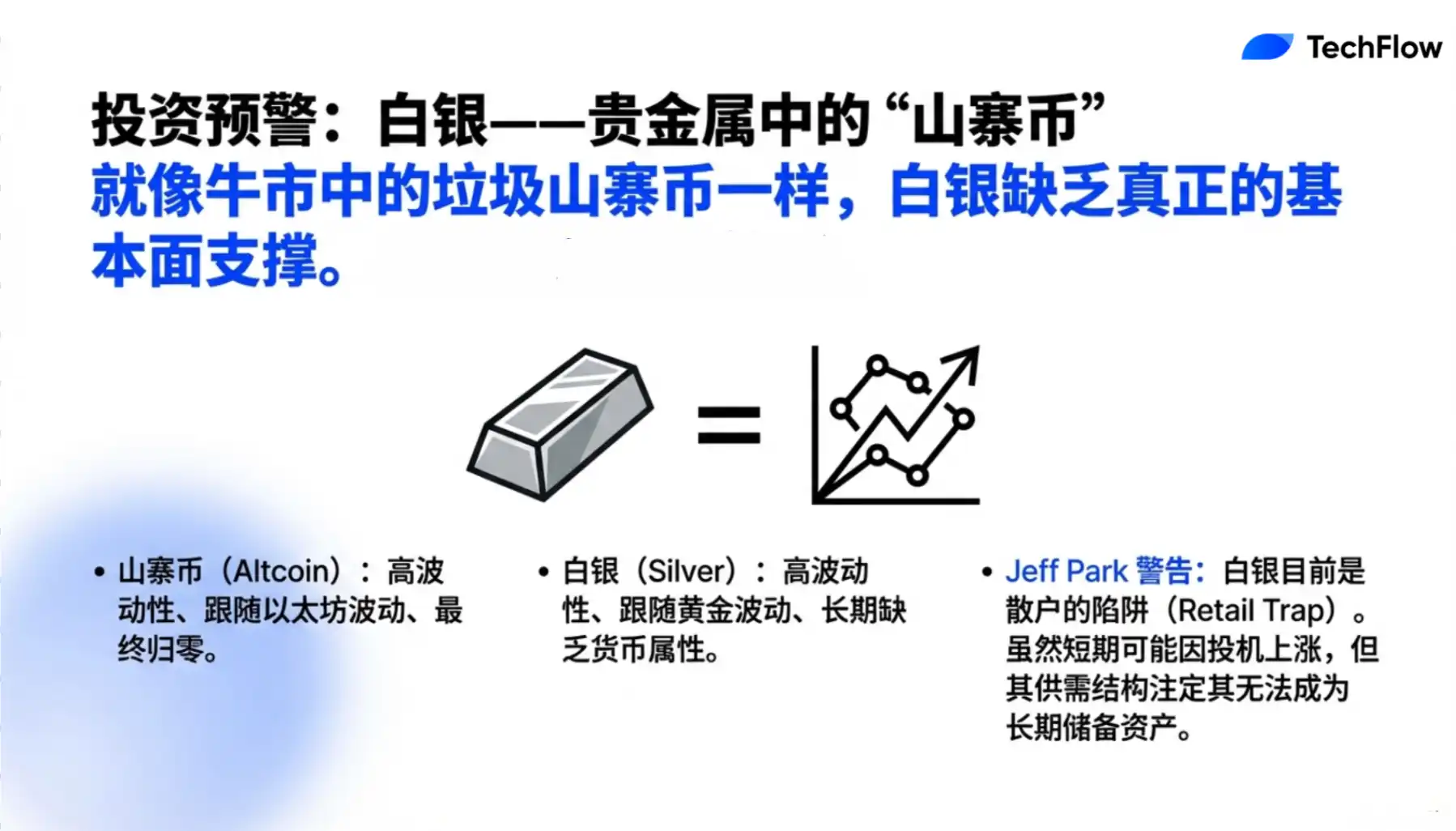
Especially silver, I feel it is currently the main target for retail investors, a situation that reminds me of the altcoin market. In fact, silver and altcoins have many similarities; silver's position in precious metals is like Ethereum's position in cryptocurrency. Although I don't mean to offend the Ethereum community, this analogy does have some validity.
Analyzing the price fluctuations of most commodities can be boiled down to two basic factors: demand and supply. From the supply side, silver is actually a by-product of other metal mining. Many people may not know that there are almost no mining companies专门 (specifically) mining for silver; most silver is produced as a by-product when mining metals like zinc or copper; you could say it's a "free gift." In the cryptocurrency world, this is like when you are yield farming, you are originally investing in Ethereum, but because you use Ethereum to participate in some on-chain mining activities, you get some random tokens as extra rewards. These tokens are like silver; they are an additional yield.
Therefore, miners won't specifically mine for silver because of its price; it's just an附加产物 (additional product) of other metal mining. From this perspective, the supply of silver is actually very large. Unlike Bitcoin's scarcity, silver's supply is relatively abundant. Eventually, the market will find a reasonable price for silver, and since silver is just a by-product of other metals, its price might be suppressed due to ample supply.
From the demand side, although some mention silver's application prospects in industrial fields like AI and solar panels, in reality, silver is a replaceable commodity. Silver is favored for its high conductivity, but copper's conductivity is only about 5% lower than silver's. This means that although silver performs excellently, its high price is not enough to make it the only choice. In fact, due to the rise in silver prices, many solar panels have started using copper instead of silver.
Furthermore, silver is not a reserve asset; no central bank buys silver. And from the supply perspective, silver production is not solely determined by its market price but is a by-product of other metal mining. Therefore, overall, I think the market outlook for silver is not optimistic.
This reminds me of the situation in the altcoin market. Silver has high price fluctuations and is highly correlated with gold's price, a relationship similar to how altcoin performance usually depends on Bitcoin's rise. However, eventually, the prices of most altcoins return to the supply-demand equilibrium point. For investors who have participated in the cryptocurrency market in the past few years, a lesson can be learned: silver's performance in the precious metals market is very similar to that of altcoins in the cryptocurrency market.
Anthony Pompliano:
So you mean the price of silver might experience a significant correction?
Jeff Park:
Yes, if you have already made good profits from silver investments, now might be the time to move that capital into Bitcoin.